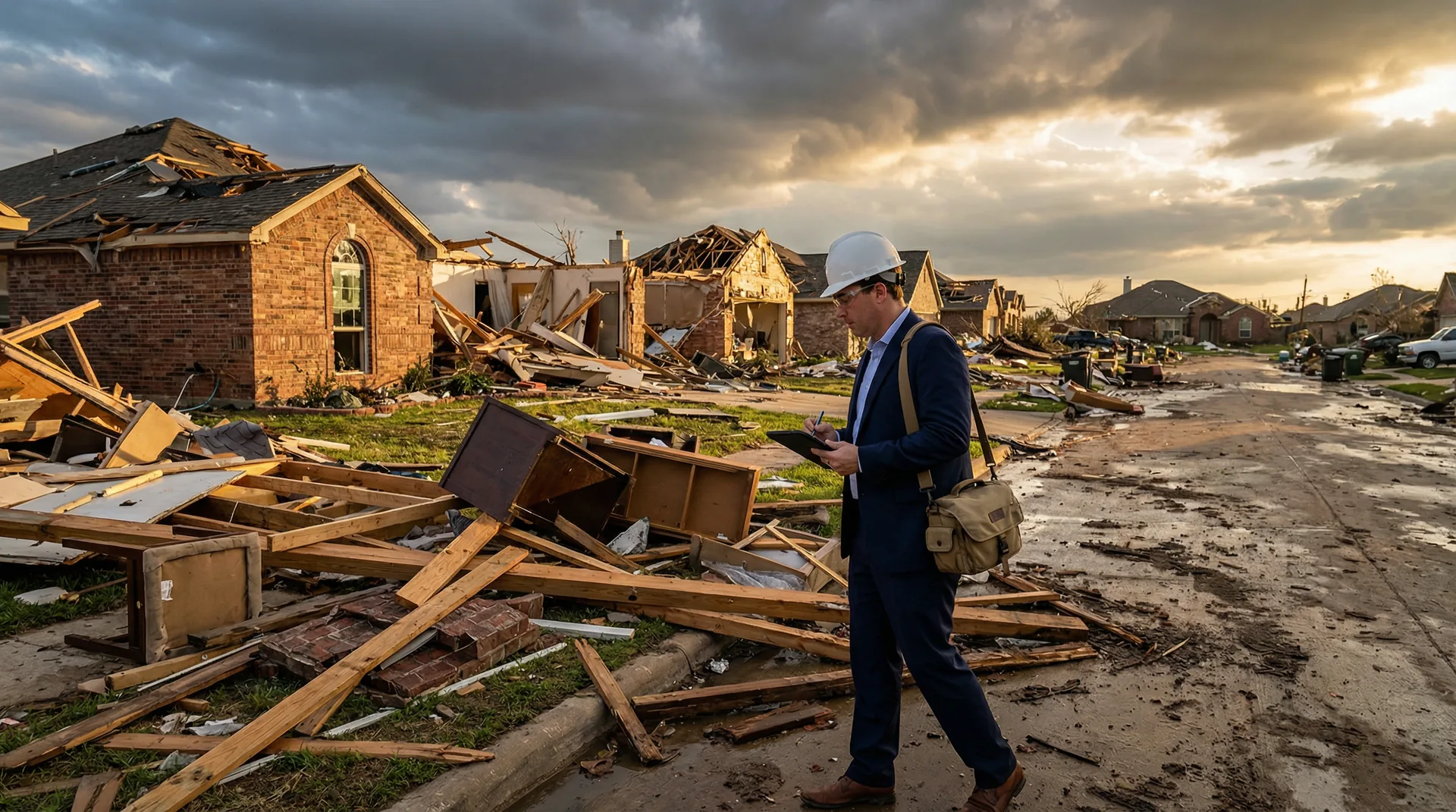
The Enhanced Fujita (EF) Scale rates tornado intensity based on the damage caused to structures and vegetation. Understanding the scale helps set expectations for the type and extent of damage at each intensity level.
65-85 mph
EF0 Wind Speed
Minor damage to roofs and trees
86-110 mph
EF1 Wind Speed
Moderate damage, roof surfaces peeled
111-135 mph
EF2 Wind Speed
Considerable damage, roofs torn off
136-165 mph
EF3 Wind Speed
Severe damage, entire stories destroyed
The Enhanced Fujita Scale was developed in 2007 to replace the original Fujita Scale. It rates tornadoes from EF0 (weakest) to EF5 (strongest) based on the damage observed to 28 damage indicators including one and two-family residences, commercial buildings, and trees. The scale provides a framework for understanding what type of structural damage is expected at each wind speed range.
EF0 tornadoes (65-85 mph) cause minor damage including broken branches, shallow-rooted trees pushed over, and damage to gutters and roof surfaces. EF1 tornadoes (86-110 mph) cause moderate damage including roof surfaces peeled off, mobile homes overturned, and windows broken. EF2 tornadoes (111-135 mph) cause considerable damage including roofs torn off well-constructed homes, mobile homes demolished, and large trees snapped or uprooted.
EF3 tornadoes (136-165 mph) cause severe damage including entire stories of well-constructed homes destroyed, severe damage to large buildings, and trains overturned. EF4 tornadoes (166-200 mph) cause devastating damage including well-constructed homes leveled, cars thrown, and large missiles generated. EF5 tornadoes (over 200 mph) cause incredible damage including strong frame homes swept away and reinforced concrete structures damaged.
Texas experiences more tornadoes than any other state, averaging approximately 140 per year. The area known as Tornado Alley extends through the Texas Panhandle and North Texas, but significant tornadoes have occurred throughout the state including the Houston metropolitan area. Common ways tornado claims are minimized include applying wind exclusions to debris impact damage, disputing the cause of interior water damage, and undervaluing contents in total loss scenarios.